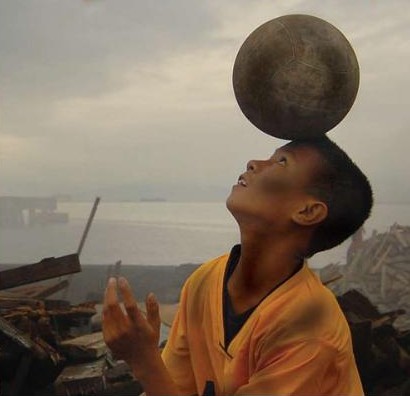
I reproduce below the appeal for help for the victims of Typhoon Sendong sent via e-mail by Fr.Renato Ocampo Alumni Director and University Chaplain of the Ateneo de Davao University. As of 6am of December 20, 2011, there are already 957 dead, 49 missing and 1,582 injured.
Our kababayans badly need our help and prayers.
—– Forwarded Message —– From: “Fr. Renato C.Ocampo, S.J.” <alumnidir@magisx.addu.edu.ph> To: XXXXXXXXXXXXXXXX, XXXXXXXX@XXXXX.com Sent: Monday, December 19, 2011 4:42 PM Subject: Tabang Sendong – Appeals for the victims of Typhoon Sendong
{AdDU Alumni Affairs ePost # 147: 2011}
December 19, 2011
Mr.XXXXXXXXXXXXXXXX,
All of us know of the serious damage to life and property caused by the recent typhoon Sendong, the worst natural disaster to hit Northern Mindanao in decades. Assistance is needed for the urgent needs of our suffering brothers and sisters in Northern Mindanao, specially in Cagayan de Oro and Iligan. It is specially difficult for them at Christmas time.
Below are the appeals from Fr. Robert C. Yap S.J., President of Xavier University – Ateneo de Cagayan and from Mr. Melvin O. Lacuna, President of the AdDU Alumni Association.
At our University Chapel, prayers are offered for the victims in our daily Masses and at the Misas de Gallo. For our alumni and friends in Davao City, donations in kind will be received at the Samahan Office, Jacinto campus until Wednesday, December 21, 2011.
May we somehow be a source of hope for the suffering. We pray that our alumni and their families who live in or near the affected areas are safe. We thank God that we in Davao City were spared by typhoon Sendong, but we have sad memories of our own recent serious flooding in Matina Pangi which came in the middle of the night and claimed lives and destroyed a lot of properties.
God bless you for your kind solidarity with our brothers and sisters in Northern Mindanao, for your prayers for them and for your material and financial help.
Fr. Renato C. Ocampo, S.J.
Alumni Director / University Chaplain
Ateneo de Davao University alumnidir@addu.edu.ph ; reneocamposj@yahoo.com
Alumni Office Tel: (082) 221-2411 local 8227
Alumni Office Mobile: +63 921 616-0484 and +63 915-642-9261
==================
As President of the Ateneo Alumni Association, I would like to appeal to fellow alumni, to please send your donations or any form of help for the victims of typhoon Sendong in Cagayan de Oro City and Iligan City.
Please coordinate with the Ateneo de Davao Alumni Office, or to any of the organizations or institutions within your locality that are receiving help and donations in behalf of the victims.
May the spirit of Christmas be in our midst as we become men and women for others in this time of need….
Thank you very much and God bless us all! Animo Ateneo!
I reproduce below Secretary of Justice Leila M. de Lima’s reaction to Renato Corona’s statement that President Aquino is a dictator. When Corona lambasted the President in his address to the judges and the court employees, he created an “open season” for himself to be hit by everybody.
Statement of Secretary of Justice Leila M. de Lima: Corona: A walking constitutional violation
[Released on December 15, 2011]
Yesterday, Corona called the President a dictator. He says that holding the Chief Justice accountable to the people through impeachment shows that the President is a dictator.
Every human being is accountable for his actions. The Constitution sets higher standards of accountability for public officials, more for judges, the highest reserved for Justices of the Supreme Court. In the case of the Chief Justice, accountability comes in only one form, by impeachment. As Chief Justice, there is no other manner by which Corona can be held accountable. But Corona says that for the President to hold him accountable in accordance with the Constitution is dictatorial, as Aquino wants control of the Supreme Court. According to Corona, his impeachment is an assault on the judiciary, the Supreme Court, the Constitution, and democracy itself. According to Corona, he cannot be held accountable without attacking the Constitution and democracy. This, according to Corona, is his very own apotheosis, for only human beings can be held accountable.
But the Filipino people know better. Judicial independence does not mean independence and exemption from justice and accountability. The highest form of accountability is demanded from no less than the highest magistrate of the land, whose title under our Constitution is deliberately termed Chief Justice, not Lord Justice, lest the title is misrepresented by its holder. This is what the President is demanding from Corona, not subservience, which Corona has already pledged to Arroyo, and certainly not capitulation. All that the President demands, what the people demand, is that Corona be held accountable. Corona, contrary to his protestations, is not exempt from the most basic human precept of accountability.
Yesterday, Corona claimed the whole judiciary for his personal retinue, ordering judges and court personnel to stop working for a day. Through the Court Administrator, he ordered that the judges and courts should not hold hearing for a day, and that everyone who went to the courts for justice yesterday should go home, because justice, that day, took a leave of absence. Yesterday, justice stopped because the Chief Justice wanted to say something to the judiciary he deemed more important than justice itself. So important were his words that the wheels of justice had to stop turning for a day.
Yesterday, the Chief Justice called the President a dictator. The title could very well apply to him. There can be no more apt description of a tyrant than someone who holds himself above justice and accountability. Clearly, the framers of the Constitution were thinking of Renato C. Corona when they did not put the Chief Justice in the line of succession to the Presidency.
The Supreme Court and the judiciary do not belong to Corona. Corona is not the judiciary. Corona may belong to Gloria Macapagal-Arroyo. Some members of the Supreme Court may belong to Gloria Macapagal-Arroyo. But the Supreme Court, the institution, the Supreme Court of the people, can never belong to Corona or to Gloria Macapagal-Arroyo. The Supreme Court belongs to the people. And when the Arroyo justices start thinking that in protecting Arroyo, they are shorn of any accountability, not even by impeachment, then it is time the people, through their representatives in Congress, impeach them. It is time the President and Congress reclaim the Court for the people.
Yesterday, Corona said that President Aquino wants him impeached because he wants to appoint a Chief Justice he could hold by the neck. Corona said that the President’s quarrel with his midnight appointment is that the President was denied the opportunity to appoint a Chief Justice he could hold by the neck. What he did not say is that by being appointed Chief Justice by Arroyo despite the constitutional prohibition on midnight appointments, it was his own neck that was held by Arroyo. More than President Aquino appointing a Chief Justice he holds by the neck, which he never got to do, it is Arroyo who appointed the Chief Justice, Corona, so that she can hold him by the neck long after her term was over.
For this is the very essence of a midnight appointment, to hold the midnight appointee by the neck, the outgoing President making a tail-end appointment to assure her power in government long after her term is over, consequently depriving the President-elect his rightful appointing authority. The Constitution states that two months before a presidential election and up to the end of her term, then President Arroyo cannot make any kind of appointment. After depriving the eventual President of his constitutional authority to appoint the next Chief Justice, Corona claims that better a Chief Justice held by the neck by Arroyo, than a Chief Justice held by the neck by the rightful and constitutional appointing authority, the incoming President Aquino. At least he was clear about who was holding who by the neck.
With his impeachment by Congress, the Chief Justice now, like his patron Gloria Macapagal-Arroyo, is nothing more than an accused. As Arroyo was the beneficiary of “Hello Garci,” Corona was the beneficiary of a constitutional violation. From the moment of his appointment, Chief Justice Corona was a walking constitutional violation. His appointment was the “Hello Garci” of the judicial department.
A midnight appointee held by the neck by Gloria-Macapagal Arroyo, Corona should be as he was rightly impeached for the simple reason that, like Gloria Macapagal-Arroyo, he is nothing more than a usurper to a public office. Corona, in his own twisted view of reality, may call the President a dictator, but he can never question Aquino’s mandate as the duly elected President of the people. Unlike the President, all that Corona can show for himself is his illegal and unconstitutional appointment as a usurper to the Office of the Chief Justice by the other usurper Gloria Macapagal-Arroyo. And as history shows, usurpers make the worst tyrants, because of their false sense of entitlement to something that was never theirs from the start.
Today is the first day of the Simbang Gabi – a nine-day novena which starts December 16 and ends on December 24. It is celebrated at 4:30 in the morning. But in recent years, when masses are also regularly held in chapels and other places outside of the main church, simbang gabis are held during evenings – at 7:00, 8:00 or 9:00 depending on the availability of the priest celebrant.
flickr photo by storm-crypt
But the original practice is to hold it at dawn; at hours before the sun rises. It is common among former colonies of Spain. The friars convinced the catholic converts to prepare themselves for the celebration of the birth of the Saviour; and what more fitting preparation there is but to attend nine-day novena mass. The problem however, is that the subjects have to be in their agricultural fields early, so as a compromise, the clergy began to hold Mass early dawn when the land would still be dark. In fact, it was so dark going to church from their homes that the faithful brought with them lanterns or parol… which later on took various shapes… and eventually into the shape of a star – the Christmas lanterns of today we are familiar with.
I remember with fondness the simbang gabi of my youth, in Padada, Davao del Sur. Misa de Gallo, as we called it, was an event that everybody looked forward to. Parishioners filled-up the church every day of the simbang gabi. Every mass was sponsored by one or two socio-civic organization, a church-based group, school-based youth organization or barangay units. The mass sponsors provided the lectors, commentators, collectors, altar servers, the choir and any and all tasks attendant to celebrating the mass.
It was not only a religious celebration; it was a social event as well. People looked around which ones of the mass goers are wearing new clothes. Some checked out what the offerors give as gifts for to make sure they will give something different when their designated day as offerors come. Kids greeted their godparents and subtly reminded them of the coming Christmas Day (and their gifts). To the teenagers and the singles it was an opportunity to see their crushes and special friends. The bolder ones sat beside them during the mass, and walked them back to their house after. Those with political ambitions lingered around after the mass and met as many people as possible.
But it is what cams after the mass that everybody looked forward to – the early morning “painit” that awaited you when you came back from the church; or the “painit” that you bought after hearing mass and before going home. The painit can be any or all of the following: bibingka, torta, suman, and biko with tsokolate or brewed coffee as the accompanying hot drink. If the lady of the house had not cooked or bought any native delicacy, the family shared a fare of pandesal with margarine bought from a neighbourhood bakery.
But even among families that had no “painit” awaiting them when they come home from mass, the simbang gabi was still something they look forward to. For one, while waiting out for the sun to rise, family members talked among themselves and consequently had some quality bonding moments. Moreover, completing the whole nine day novena without fail has its rewards. It is said that when if you make a wish on the first day of the mass and when you completed the nine day mass, your wish will be granted.
He should have seen it coming. He was a midnight appointee. He was not the most senior of the justices, so it was not a case of making sure the most senior got the job. Many people believe he was appointed by Arroyo to protect her. He was after all her former chief of staff and her former spokesman, to name a few posts he held under the Arroyo administration. And he was not the only one “indebted” to the former president: his wife was given a post in a government-owned and controlled corporation.
The presidential campaign of Noynoy Aquino has four legs: Food, Jobs, Education and Anti-Corruption. And now that he is president, he is damn well serious about delivering these promises. But with a Chief Justice of the Supreme Court perceived to be a hindrance, and not an ally in fighting corruption and/or persecuting those who committed corrupt practices, it was just a matter of time before an impeachment process is put in motion. Chief Justice Renato Corona should have seen it coming when this administration marshalled its forces Congress to make sure that Ombudsman Merceditas Gutierrez is impeached.
Or perhaps, he may have known about it way before his public announcement of such a plot in the morning of the day he is impeached. After all, we lesser mortals have heard about the move from the grapevine more than a month ago.
I am sure Chief Justice Corona has prepared for this eventuality. He may dig in, but that will be a costly move for him. The more he digs in, the more people will believe he is doing it to make sure he is in still with the Supreme Court when anyone of the cases against Gloria Arroyo will reach the highest court of the land.
Enrile’s Senate will hear the impeachment of Corona with Pnoy’s Congress allies serving as prosecutors
Moreover, when the impeachment trial will start at the Senate level, the prosecutors will present a lot of evidence to prove their case against the Chief Justice. That will bring out a lot of dirty linens. Are Renato Corona and his family ready for that?
A few opinion makers have branded the current acts of the president as bullying – but the fact remains – an overwhelming majority of Filipinos is behind the president in his actions against the Chief Justice. Chief Justice Corona is widely perceived to be as a GMA boy even before the formal announcement of his appointment. It would be hard put for him to shed that image. Not even his personal guestings in various radio and cable since his appointment as Chief Justice helped.
Doing what Merceditas Gutierrez did before her impeachment was heard by the Senate might be something Chief Justice Renato Corona should consider.
In a earlier post, I wrote about the circumstances behind my joining the Happyland team as one of its producers. Here is the second part of my experience as an indie movie producer.
The Main Story:
Jim conducted various interviews with football aficionados, Don Bosco Brothers and former Tondo barefoot players to weave the story for the film. This is the excerpt of the movie:.
A Spanish missionary priest tries to form a fighting football team composed of disadvantaged boys from the slums. He enrolled the help of a seminarian, who was a college football star; his assistant parish priest; a volunteer catechist, and, parish workers.
Together, they recruit the most unlikely group of young men – a neighborhood basketball star; a skilled pickpocket and fearless thief; two drug-sniffing brothers who live off the garbage dump; a hare-lipped rapper wannabe; a gang leader; a pedicab driver; and many others. The young men were lured by the dream of winning the tournament’s hefty cash prize. And to win, they only have to do one thing — beat their opponents from the “rich catholic schools.”
The priests, the seminarian, catechists and other church people set out to build his football team.
The Back Story
The priest was inspired by the story of Filipino striker Paulino Alcantara– star of the Spanish football team FC Barcelona in the 1930s. His record of 357 goals in 367 games is still unmatched in Spain’s football history. It is the memory of Alcantara’s feats that inspired Father Jose, the Spanish missionary priest, to attempt the audacious: build a football team in the slums of Tondo.
Our original plan was to shoot some scenes in Barcelona to highlight the extraordinary feat of Paulino Alcantara. Budgetary constraints prevented us from doing so. Thus,we settled for dream scene instead. However, the Paulino Alcantara story may have been among the reasons (plus probably the fact that Spain won the FIFA World Cup that year) why we got invited to screen the film during the Spanish film festival in Manila in 2010.
The Actors
Strictly speaking, we did not have any professional actors in the cast. But we do have football players who had important roles in the movies: Phil Younghusband, China Cojuangco, and football players from various exclusive schools. We also hired actual residents as extras. Some of the supporting characters were playing their real selves. Nevertheless, the production experience was one of camaraderie and fun.
People behind the Camera
Mitch Moreno, Jim’s partner, was the project’s workhorse. She was in control of all aspects of the project, except the creative side which was Jim’s.
I helped raised money from corporate sponsors. Initially the corporate guys listened to the pitches mainly because they were my friends, but when they started to interact with the production and the creative group, and after they have internalized the film’s story line, they become converts. We got funding from Alaska, Rebisco, and a few other brands..
Butch Jimenez and Manny Luna of Activ Asia pitched in with their personal funds. It was Mitch and Jim who talked to Butch and Manny, and since I saw the presentation outline before the meetings, I believe they were not there as financial investors but as believers in the objectives of the project.
We also got grants from a European donor and from the Film Development Council of the Philippines (FDCP). We also did crowd-sourcing, a way of raising money via the social network, and got monetary contributions from various individuals.
It was a lean and mean way of running a movie production project, poles apart from my experience with my former network. At Happyland, we planned every shooting day and source out the best cost for everything we need in the production. It also helped that some members of the creative team agreed to cuts in their professional fees..
The Setting:
Happyland
The movie’s setting was a place in Tondo that residents call “Happyland,” which comes from the word “hapilan” — a Visayan word for “garbage dump. “ The movies main characters lived in this place – a former smoking mountain of trash that government bulldozers levelled to give way to substandard and cramped residential buildings for the poor.
At one point, Star Cinema talked to us about the possibility of co-producing the film. It came with a condition though. They will re-write portions of the story to make it more commercial, introducing among others, a love angle aspect to the story. A tie-up with Star Cinema would have meant a great boost to the commercial success of the film. On the other hand, it would also mean we have to replace a number of actors, which would have resulted in a dissension among the ranks of our technical and creative personnel. A number of them are apprehensive with working with a major studio as this may result in loss of their creative independence. After much thought. I politely told Malou Santos, MD of Star Cinema, that in the interest of “industrial peace” I will have to refuse her offer.
The Economics
We struggled to finish the film. We began filming at the beginning of 2010. We intended to release the film around June or July 2010, around the same time as the World Cup. However, problems encountered during post-production delayed the film’s release and put the production into debt. The post production house has inadvertently erased very important materials from two days of shoot, so we have to re-shoot those scenes. Production costs also shoot up because of the elevated cost of storage and expensive cost of post production that the choice of Red Cameras entails.
Nevertheless, there were opportunities that resulted out of our failure to meet the June-July 2010 deadline. Spain won the World Cup, and so when they held their Spanish film festival in Metro Manila in October 2010, they look for a football movie to show in their festival. Happyland is that movie – the first movie about football produced by a Filipino team.
Next Steps
The first payback we got was that we were able to provide opportunities for personal growth to the more than 20 teenaged football players who joined the cast. Some of the boys got football scholarships. Another one became a team member of the Philippine team to the Homeless World Cup. Moreover, the boys today are more confident and sure of themselves compared to how they were before we started their training.
Meanwhile, the Philippine football team -the Azkals, won games in the Asian stage and soon enough, football became a household word. That rubbed off on us, and it became a bit easier to get groups and communities to sponsor private screenings of the movie. Adobo magazine – the authoritative advertising industry publication sponsored a special screenings of the movie. It even got its corporate clients and guest to donate money or shoes for the Tondo boys.
It was clear to us that Happyland will have a difficult time at the commercial theaters, so our strategy was to do private screenings of the movie. It was also screened in various Sineng Pambansa events in various cities around the country. And it is making the rounds in schools and communities.
To be sure, we are still a long way from recovering the investments we made for the movie, But it is an historical first. It is the first football movie produced in the Philippines. It even won awards for some of our creative and technical staff.
And to me, the satisfaction of being part of a pioneering media vehicle featuring the game of football.
I become a producer of a movie about football two years before the sport got widespread attention. We even tapped the country’s most popular football player, Phil Younghusband, as one of the major actors in that independent film.
Serendipity
During the summer of 2008 my son attended a football clinic. As a culminating activity, football trainers from various schools held a friendly tournament among their wards. I was watching the friendly among teams composed of players aged 16 years and below. The venue was the Ateneo Football field. The name of the visiting team was Los Mataderos.
They don’t look like butchers to me, but the team name and being from Tondo evoked toughness and a killer ring to it. There was therefore an initial hesitance of the Ateneo boys to rough it up with the visiting team. Some of the Tondo boys were playing barefoot while others had worn out shoes. They were cursing a lot, but would quickly lower their voices when their coach called their attention.
Except for 3 or 4 players, most of the team members are still newbies. Nevertheless, they won the game and would have been the champion of the tournament had the organizers not discover that their best player was over aged.
They were also on a first named basis with my son’s team trainer/coach. I learned later that Coach Boy also trains the team. In fact, he grew up in the same neighbourhood as these boys. Like many others that played with him before, football became their ticket to changes in their economic well being. It sent them to school, it put them away from a life of vice and crime, and it paved the way for them to get jobs.
I thought that if football became a ticket for some Tondo boys to improve their lives, other boys all over the country can benefit from being good players of the sport. All it takes is an inspiration. And what would that be? Back then, I noted three possibilities: (1) a winning national team; (2)a popular league and/or players; and, (3) an inspirational media vehicle (movie,TV show, social network page, or a book).
In another part of the field on that same day, Jim Libiran was also watching his son play football. In the course of the tournament, Jim also noticed the barefoot boys and asked a question or two about them. He learned that they are from the same area that he used as a setting for Tribu, his award winning movie about the gangs of Tondo. The film maker and storyteller in him saw a material for a film.
Elsewhere, Peter Amores, a former college football standout, took a respite from helping manage their family business in Cebu and started a non government organization with the objective of teaching football to street kids. He named his NGO, Futkal or Futbol sa Kalye.
One year later, Jim Libiran invited me to a cup of coffee. At Bo’s Coffee in Katipunan, while both of us were waiting to fetch our sons, we talked about Happyland,his second movie after the much acclaimed Tribu. Jim invited me to join him in the project. My role is to advise the team on the business and marketing aspects of film-making and of course, to help get corporate sponsors for the movie.
Jim has also encouraged Peter Amores to take FutKal to Tondo.
Jim and Peter tapped more than 20 boys ranging from 12 to 20 years old and provided them with football training and even acting lessons in preparation for the film. They tapped the players Jim and I observed at play during the Ateneo tournament.
Immediately during our first meeting, I said yes to Jim, not only because producing films is in my bucket list but also because the project is a vehicle that will popularize a sport wherein Filipinos have a fighting chance in the world stage. I also have a personal affinity with the main message of the film which is: “Victory is sweetest if you worked hard enough for it. One won game is not enough to win a tournament. Fight hard enough in every game. Give it your best and then fight some more.”
And so it came to pass that I got involved in the independent movie, Happyland.