Happy thoughts!
Lugang Cafe At Greenhills
The venue was Lugang Café –a three-story restaurant on Connecticut Avenue in Greenhills serving Taiwanese and Cantonese cuisine.
The ambiance is perfect. The interiors are posh and opulent in a modern oriental design. The owners have taken every effort to make sure the overall look, feel and appearance of the restaurant would justify the price range of the food, which is a little bit on the high side.
Level of service is excellent and consistent throughout the whole visit – from the time we arrived and looked for parking space, to when we waited to be seated up to the time we were served our food.
We arrived at the place a few minutes past 6pm. It was early enough to be able to get a slot at the resto’s parking lot across the street assisted by very able parking attendants. However, we were already number 3 in the waiting list and had to wait for almost thirty minutes before we got seated.
Considering that the place was full of customers all the way to the third floor, the staff were trying their best to be on top of the situation.We got seated in the dining area on the third floor. We pre-selected our orders while waiting for our seats, but they did not start cooking the food until we were seated.
And probably in their desire to provide quick service, at one instance even the janitor served a plate of food when the waiters were busy getting the other viand from the kitchen in the lower floors.
And now for the food.
Putting Lugang Café’s Oyster Omelette to Test

Somebody from Chinatown told one of my sons that a good barometer of how well a chef cooks Chinese food is via the taste of his oyster omelette in sweet spicy sauce. We always thought the better test was via pork or fish in sweet and sour sauce. But since we all agree that we may be biased for our own kitchen’s version of sweet and sour sauce, we decided to check the correlation between the oyster omelet on one hand and the other Chinese food that we will order that evening on the other hand. So that was the first dish we ordered and tasted for the night.
The verdict: 8 on a scale of 1 to 10 for the dish. After the dinner, we agreed that this rating has a strong correlation with the way overall rating we gave to the dinner — majority of the food were very good but one or two may stand some improvement.
Xiao Long Bao and Steamed Vegetable and Pork Dumplings


These are soup-filled dimsums which have become popular offerings in the past year by new Chinese restaurants. Lugang Cafe has one of the better versions.
The pork xiao long bao is good. The skin was thin but the soup is contained. As you bite into it the juice oozes and you enjoy the taste of the filling that’s you should into the soy vinegar with ginger slices.
The steamed vegetable and pork dumplings is delicate and delectable. We had to make a slurping sound as we put the dumplings into our mouth or else we may have burned our tongues with its broth.
Stir-Fried Beef with Chilli Peppers

Served on a hot pot, a fair amount of dried chilies accompany the dish. It has the heat spunk but is totally tolerable unless you eat the actual chili or chili seeds. The very thin slices of beef has splinters of fat on the side. These absorbed the flavor of the sauce, resulting in a tender and flavorful bite.
Kung Pao Prawns (650)

The kung pao prawns was cooked in sweet and spicy sauce with rings of red pepper and lots of cashew nuts. It tasted sweet, spicy and tart. It was good enough but not great. This may have been due to a high expectation we had of Chinese restaurants as regards to the way they cook prawns and crabs. Moreover, we thought that for the size of the serving , it is a bit overpriced.
String Beans with Salted Egg (220)

This is the dish that impressed us the most. The vegetable was cooked just right and has retained its crunchiness. The addition of salted egg brought out just the right amount fo saltiness to the dish. While eating we made some effort at trying to identify what other ingredients may have been included in the dish — with the intent of cooking one in our kitchen.
Dong Bo Pork with Gua Bao
The Dong Bo Pork is best eaten tucked in-between a sliced Gua Bao.The pork is very fatty, with a soft-stewed skin still on the cube. The meat breaks apart easily and is tender. The fatty layers between the meat is soft and juicy.


Bellagio Breeze
This dessert was the big come on of the evening. It is a a tower of shaved ice, with all sorts of beans, tubers, sago mixed. We had a great time sharing and enjoying the dessert.
There are still a lot of items in the menu that are worth trying. I am sure that we will go back to Lugang Cafe some other time to try its other dishes and desserts.
Tongue Twister from Jose Yparaguirre
Got this from my college classmate – Jose Yparaguirre. I am posting this because most of the time having “nosebleed” moments refer to situation when we have a difficult time with a foreign language. Check out how well you can translate the paragraphs below:
“Ang kinabuhi nato sama sa usa ka basurahan. Sulod niini ang mga nagtapun-og ug gilangaw natong mga kagahapon. Adunay mga gum-os nga gugma, lata ug gi-ulod nga mga pagmahay, mga silopin sa kasilag ug mga botelya sa kasaypanan. Kun kini dili nimo ilaba, mamahimo kining BARA sa imong mga PANGANDOY.
Mao, balik-lantaw sa nangagi aron matugkad ang kinauyukan ug lintunganay niining tanan sa kasamtangang panahon aron ugma damlag makab-ot ang gihanduraw ning atong tanlag.
Higala, kinsay nag-ingon nga english lang ang maka -nosebleed”?
Good day!
September 19
On September 19, 1980, I got detained for leading an anti-martial law rally in Davao City. More than 200 of us were first held in a covered court inside a military camp with no food for 2 days. Thereafter, 5 of us were left behind in jail for 3 months.
In September 19, 1990 my wife gave birth to our second son. My wife’s waterbag broke before we got to the hospital. RR was born premature – apparently in a hurry to see the world.
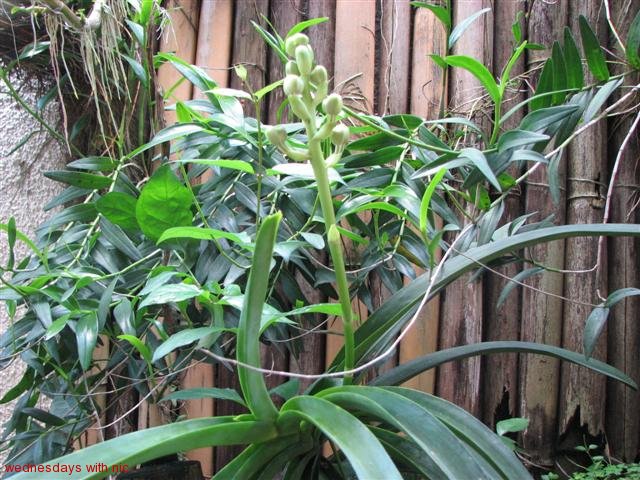
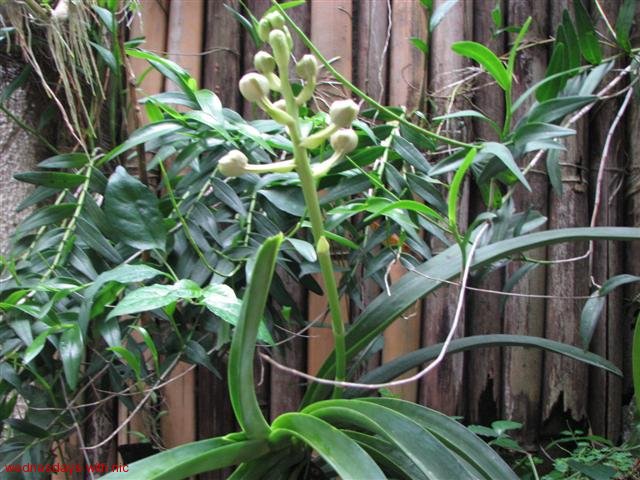
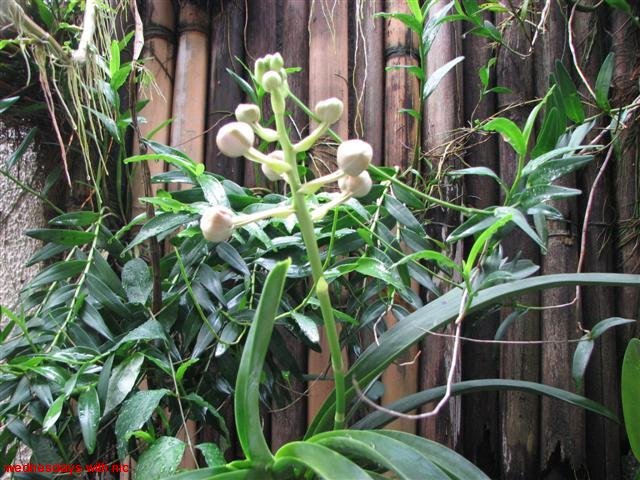
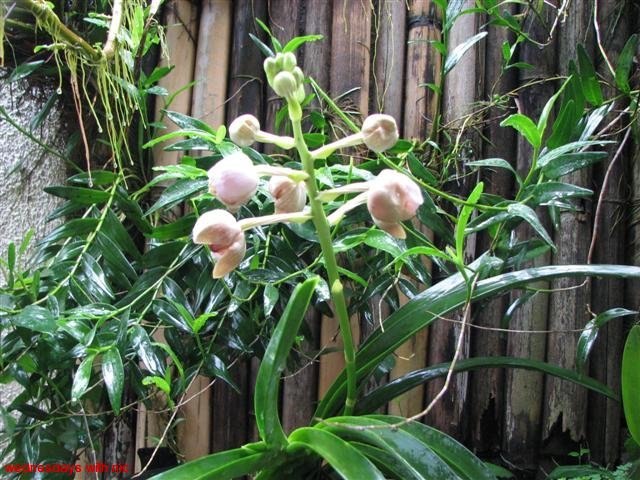
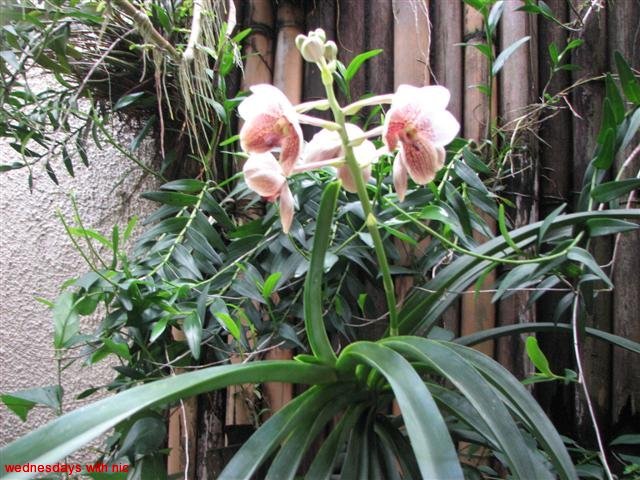
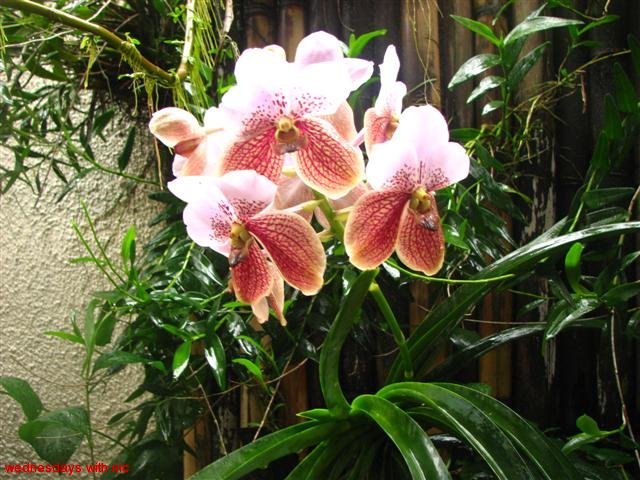
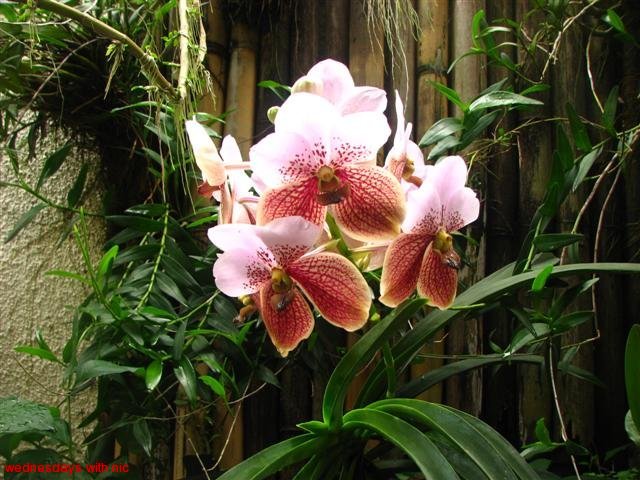
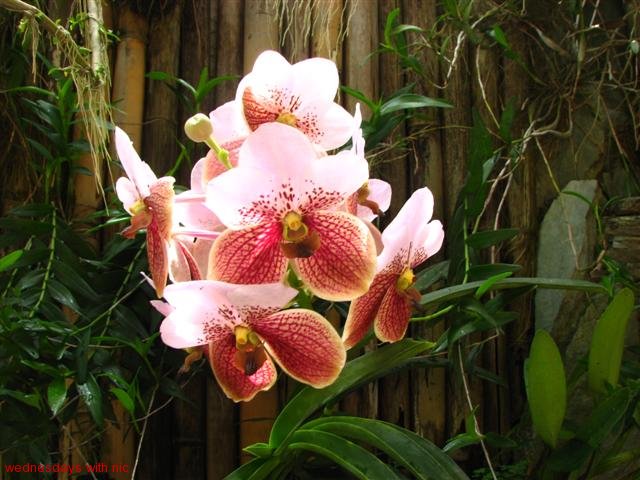
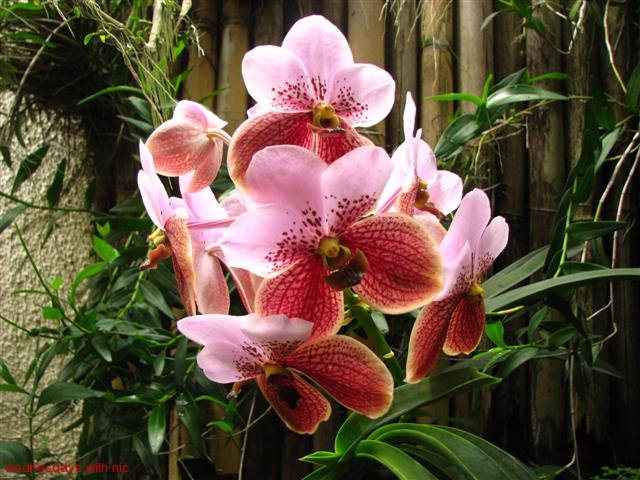
Walingwaling: from Bud to Full Bloom
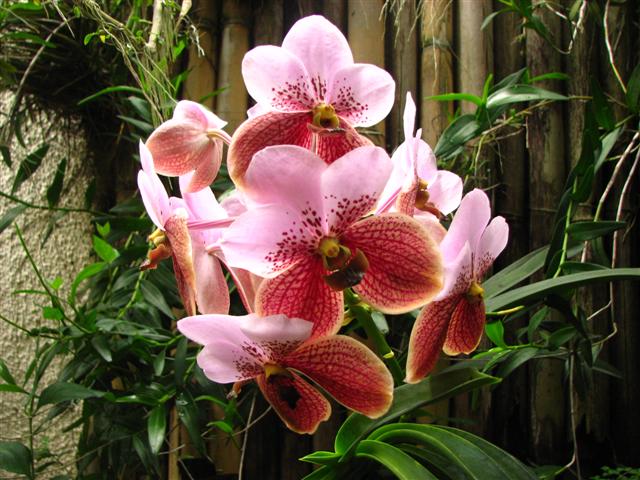
Vanda sanderiana – that is what the folks at the Philippine Orchid Society and a lot of hobbyists call this orchid. But to people from Davao, Cotabato and Zamboanga, where this orchid is, we call it waling-waling. Before scientists propagated it in nurseries under laboratory conditions, waling-waling only grows as an epiphyte attached to dipterocarp forest trees.
Waling-waling produces beautiful flowers worthy of its description as the “Queen of Philippine Orchids”. The species bloom in the Philippines from July to October, usually after experiencing close to a month of continuous downpour brought about by the monsoon.
Having a waling-waling in our garden and watching it grew from a small seedling to a full-grown plant is one my those things I always wanted to do. I cannot afford the hobby when I was young. And I did not have time to do it when I was engaged in full-time corporate work. So when, I took the early retirement plunge, I finally had the chance to do it!
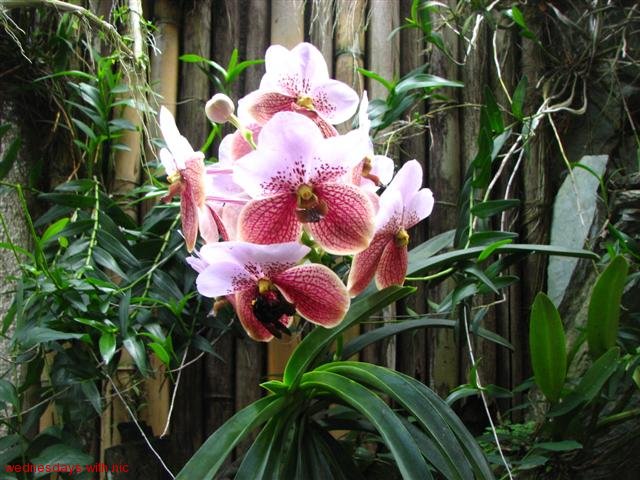
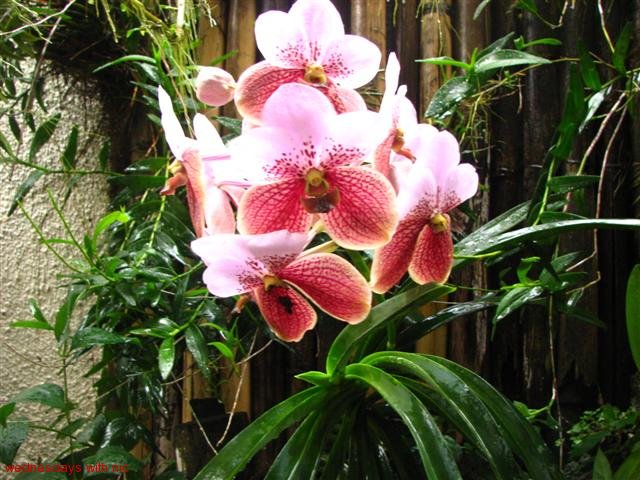
I bought the young plant (less than 4 inches tall) in 2005. I attached it to a driftwood and watched it grew to full size until it had its first spike four years later. So, for more than two weeks sometime in July to August 2009, I was watching the orchid develop from spike to bud to full bloom to the time its last petals fall. And I took snapshots of the waling-waling orchid from bud to full bloom.
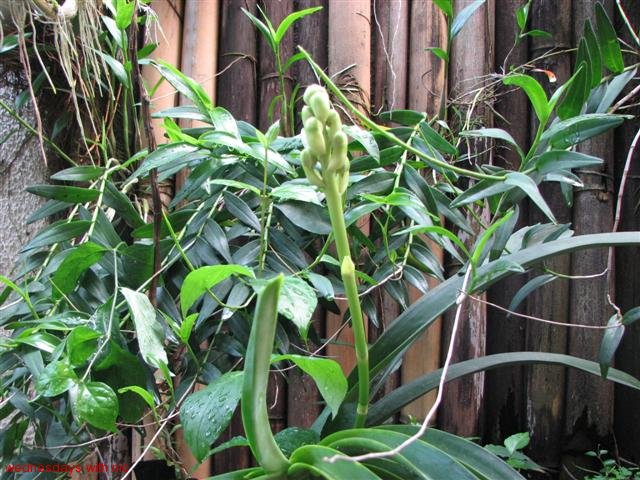
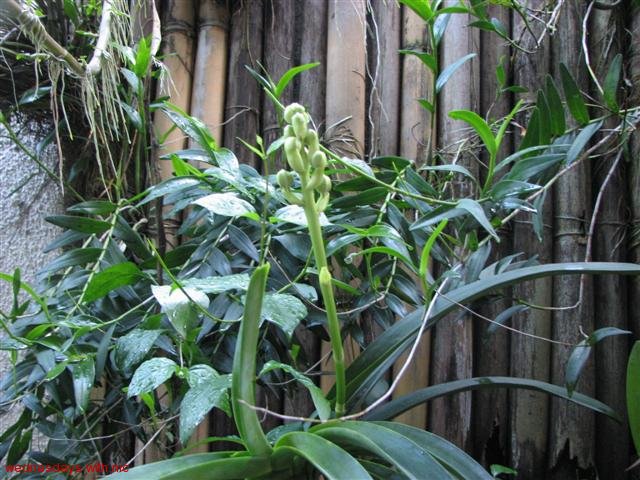
Below was the first of the series of pictures I took. The flower bud had been there for more than a week. The spike started to come out around two weeks earlier. On 27 July 2009, I took my first snapshot using a Canon Powershot S3 1S.

Over the next few days the buds started to open. Notice in the pictures below how the shape of the buds changes, starting from the lowermost portion up to the topmost until they are all extended and ready to open (pictures July 28 to July 31).


They were on their way to bloom by August 1 with the lowermost buds opening up first and working their way into the uppermost buds.


I was on out-of-town trip in the next three days, so I failed to take photos. When I came back, the buds were already fully opened. I spent the next week enjoying the grandeur of the waling-waling flowers until its fullest bloom. i took snapshots until the petals started to wilt, but i am not posting those pictures here.


Being an amateur photographer, I did not get the best photo composition deserving of the waling-waling. But I am happy with the thought that I had the patience to go back to the same spot almost every day for 3 weeks to observe and to take snapshots of the Queen of Orchids as it bloomed.
Should you want to see the series of pictures again watch the slideshow below. Just click the photo for the slide to move to the next one.
Bangkok 101 by Emmanuel Roldan
Bangkok Tourism 101
DAVAO City — Lately I visited Bangkok, the “City of Life”. It looks like Manila where the old and new cultures collide but with a different touch and ambiance of exotic Asia where Westerners are lured to discover. It is indeed a city busting with life because it is the center of trade and commerce and a prime tourist destination in Asia. Despite of the heated political climate obtaining in Thailand lately, where a regime is replaced by another through both violent and non-violent uprising just like our EDSA revolt,Bangkok is still a magnet for tourists.
I think Davao and Cagayan de Oro can learn much from Bangkok because unlike Manila and Cebu, they have immense potential for tourism, infrastructure and industrial development. I do not claim to be an expert in urban development. But I am a keen observer of things, people and situation so that I can share my observations to others who have the “K” and power to accomplish things. The people from the University of the Philippines, Asian Institute of Management and Development Academy of the Philippines, etc., must have such collective expertise to turn around our sleepy economy into a robust one if they can just learn to work together as a team. Of course they cannot move without the political will of the government to keep this team going.
I arrived at Bangkok Suvarnabhumi International Airport on an evening flight from Manila in August 22. I had to attend a week-long regional workshop on engaging the UN Human Rights Council and the Universal Periodic Review at Intercontinental Hotel Bangkok sponsored by Save the Children Sweden. I would not delve much about the workshop but on what I observe there that makes the city a prime tourism destination in Asian region. Here are some of the features of Bangkok that are interesting:

First is the airport. They say that first impression lasts. Air and sea ports are the first “line of sight” of any visitor. As a rule of thumb, they must be impressive to attract visitors to discover what lies behind the gold linings of the ports. Bangkok Airport may not be grand as the Hong Kong International or the Paris International which I also visited some years ago but definitely it’s one of the best in Asia. Our NAIA pales in comparison with Suvarnabhumi in terms of its overall design and amenities. Our Davao International Airport looks like a tiny wing of its multi-layered and multi-faceted airport. One can literally waste his time in the mess of boutiques and stores selling souvenirs and duty-free gift items. The airport also offers luxury restaurants, gyms, games area, internet stalls, clinics, chapels and prayer rooms.

The second point of interest is the efficient railway system. Bangkok airport is connected to the center of the city by two railway airport links aside from the usual public taxi and airport limousine which are appropriate for those with big luggage but are quite expensive. The traffic condition of Bangkok is terrible, to say the least, so travel organizers prefer the railway system for traffic-sensitive and budget conscious visitors. One railway is the non-stop Airport Express from the airport to Makkasan station in the East and the City Line which is heading to the Phayathai station to the West. It took me about 40 minutes to reach Phayathai for a fare of 40 Baht (around Php 60). From these stations you can transfer to the elevated Sky Train, also called the BTS to skirt the heavy traffic below and to proceed to any places in the city at no time at all. Our traffic congestion in Manila, Cebu and eventually Davao will surely ease with such an efficient railway system.
The third point of interest is the lodging and function amenities like hotels and convention halls. Visitors come because they want ease, peace and fun. I was booked at Room 411 of Holiday Inn Bangkok which is just a stone throw away from the ravaging BTS railway but I could not hear any roar and thunder as it passed by. The place was cozy yet homely, a great place to rest from all the day’s work and worry. Our workshop venue was at the Presidential I and II suites of the adjacent Intercontinental Hotel. If you take pride of Marco Polo and Insular Waterfront as the best that Davao can give, you might change your mind if you would see the Intercontinental at973 Ploenchit Road and other plush hotels in their category in Bangkok.
The fourth is people and places of interest. For those who are more culturally-inclined, they can visit many religious and cultural sites where distinct Thai arts are displayed and dances and songs performed. No wonder Bangkok is also called the “City of Temples” because of its numerous Buddhist shrines and images found even in the city’s busiest streets. There is one fronting the street from the Intercontinental complete with priests and dancers in ethnic costumes doing their thing almost 7/24. If you are lucky you can get a glimpse of the royal life of the revered King and Queen of Thailand doing their ceremonial functions in one of the state’s offices in Bangkok. Those who love outdoors can try the Koh Samui’s crystal waters of the Amari Palm Reef and other resorts to have a good tan. Shopping complexes selling hi-end i-Pods, 4G cell phones to second hand “ukay-ukay” are everywhere. Just make it sure you get the “best” of those fake gadgets for your money and not get skin rashes from those fancy clothes sold in the “bangketa”.

The fifth is food. If I am right, Buddhism, the prominent religion of Thailand like Christianity, has no food restrictions. Authentic Thai restaurants like the Kum Poon and dumpling king Din Tai Fung located at the 7th floor of the Central World Plaza have a small stove and wok or pot on each table where customers can fry and boil their dishes as they wish. Thai food is usually spicy but visitors can always have a choice of their usual fare of burgers, spaghetti, salad and long array of Chinese dishes. For curiosity, I tried a pack of two sticks of ball-shaped street-made “longanisa” for 20 Baht near the Siam Train station. And lo and behold, it tastes exactly like the ‘longanisa” of the barbecue shanties at Magallanes and Claveria streets of Davao. The only exception is that the pack of Bangkok “longanisa” is not complete without shreds of cabbage and 10 pairs of raw “siling labuyo” which you ought to eat with your meal. What a hot experience indeed. Chow!
(This article first appeared on September 02, 2011 was published 2 at Mindanao Gold Star Daily (www.goldstardailynews.com) Emmanuel Roldan’s column Davao’s Peak . The author can be reached via email at: emmanuel.roldan@gmail.com)
About Emmanuel Roldan:
Emi is my kababayan from Padada, Davao del Sur. We went to the same high school and were altar boys and choir members in our parish church. Today, is a news editor/columnist of the Mindanao Gold Star Daily – a member of the Sunstar Group. Aside from being a journalist, he is also a development worker and a human rights advocate having served in various organizations engaged in human rights protection and development work. At work and at play, Emi was able to nurture his childhood love for music. He still plays mean tunes on his guitar and sings very well.