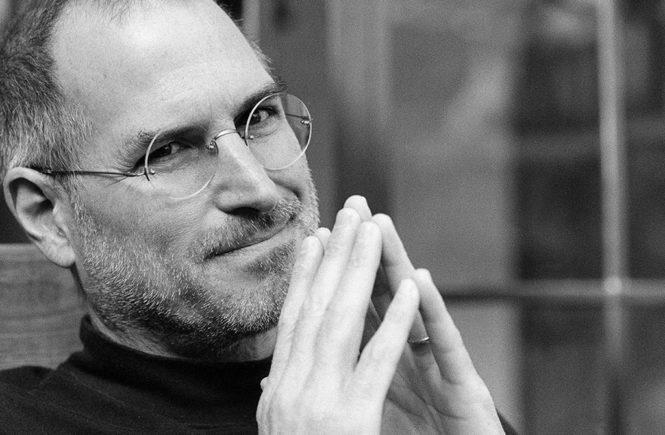
You’ve Got to Find What You Love

October 5, 2014 marks the third year anniversary of the passing of Steve Jobs— widely regarded by his peers as a visionary, an innovator and a figure that will be remembered for changing the world.

Steve Jobs left his mark in game changing and profitable  innovations in the field of personal computers(Apple II and Macintosh); animation (Pixar);  music(iPod, iTunes), phones (iPhone), and tablets(ipad).

He did not finish college, but he built a computer empire and became a multi-millionaire in a few years.

He was fired from his own company before coming back a decade later to save it and turn it into one of the world’s most influential corporations,

He is a great presenter, anchoring practically all the product launches of Apple. But perhaps one of the most memorable speeches he has delivered is the one on June 12, 2005 at Stanford University. For somebody who has dropped out of college the commencement speech speaks volumes of what this great mind has in mind and could provide inspiration to most young people seeking to build a career.

Do take 15 minutes of your life and just listen to this speech. It is by far one of the best speeches ever given!

[Steve Job’s 2005 Stanford Commencement Address]


Or read the the transcript of the talk below:

I am honored to be with you today at your commencement from one of the finest universities in the world. I never graduated from college. Truth be told, this is the closest I’ve ever gotten to a college graduation. Today I want to tell you three stories from my life. That’s it. No big deal. Just three stories.

The first story is about connecting the dots.

I dropped out of Reed College after the first 6 months, but then stayed around as a drop-in for another 18 months or so before I really quit. So why did I drop out?
It started before I was born. My biological mother was a young, unwed college graduate student, and she decided to put me up for adoption. She felt very strongly that I should be adopted by college graduates, so everything was all set for me to be adopted at birth by a lawyer and his wife. Except that when I popped out they decided at the last minute that they really wanted a girl. So my parents, who were on a waiting list, got a call in the middle of the night asking: “We have an unexpected baby boy; do you want him?” They said: “Of course.” My biological mother later found out that my mother had never graduated from college and that my father had never graduated from high school. She refused to sign the final adoption papers. She only relented a few months later when my parents promised that I would someday go to college.

And 17 years later I did go to college. But I naively chose a college that was almost as expensive as Stanford, and all of my working-class parents’ savings were being spent on my college tuition. After six months, I couldn’t see the value in it. I had no idea what I wanted to do with my life and no idea how college was going to help me figure it out. And here I was spending all of the money my parents had saved their entire life. So I decided to drop out and trust that it would all work out OK. It was pretty scary at the time, but looking back it was one of the best decisions I ever made. The minute I dropped out I could stop taking the required classes that didn’t interest me, and begin dropping in on the ones that looked interesting.

It wasn’t all romantic. I didn’t have a dorm room, so I slept on the floor in friends’ rooms, I returned coke bottles for the 5¢ deposits to buy food with, and I would walk the 7 miles across town every Sunday night to get one good meal a week at the Hare Krishna temple. I loved it. And much of what I stumbled into by following my curiosity and intuition turned out to be priceless later on.

Let me give you one example:

Reed College at that time offered perhaps the best calligraphy instruction in the country. Throughout the campus every poster, every label on every drawer, was beautifully hand calligraphed. Because I had dropped out and didn’t have to take the normal classes, I decided to take a calligraphy class to learn how to do this. I learned about serif and san serif typefaces, about varying the amount of space between different letter combinations, about what makes great typography great. It was beautiful, historical, artistically subtle in a way that science can’t capture, and I found it fascinating.
None of this had even a hope of any practical application in my life. But ten years later, when we were designing the first Macintosh computer, it all came back to me. And we designed it all into the Mac. It was the first computer with beautiful typography. If I had never dropped in on that single course in college, the Mac would have never had multiple typefaces or proportionally spaced fonts. And since Windows just copied the Mac, it’s likely that no personal computer would have them. If I had never dropped out, I would have never dropped in on this calligraphy class, and personal computers might not have the wonderful typography that they do. Of course it was impossible to connect the dots looking forward when I was in college. But it was very, very clear looking backwards ten years later.

Again, you can’t connect the dots looking forward; you can only connect them looking backwards. So you have to trust that the dots will somehow connect in your future. You have to trust in something — your gut, destiny, life, karma, whatever. This approach has never let me down, and it has made all the difference in my life.

My second story is about love and loss.

I was lucky — I found what I loved to do early in life. Woz and I started Apple in my parents garage when I was 20. We worked hard, and in 10 years Apple had grown from just the two of us in a garage into a $2 billion company with over 4000 employees. We had just released our finest creation — the Macintosh — a year earlier, and I had just turned 30. And then I got fired. How can you get fired from a company you started? Well, as Apple grew we hired someone who I thought was very talented to run the company with me, and for the first year or so things went well. But then our visions of the future began to diverge and eventually we had a falling out. When we did, our Board of Directors sided with him. So at 30 I was out. And very publicly out. What had been the focus of my entire adult life was gone, and it was devastating.

I really didn’t know what to do for a few months. I felt that I had let the previous generation of entrepreneurs down – that I had dropped the baton as it was being passed to me. I met with David Packard and Bob Noyce and tried to apologize for screwing up so badly. I was a very public failure, and I even thought about running away from the valley. But something slowly began to dawn on me — I still loved what I did. The turn of events at Apple had not changed that one bit. I had been rejected, but I was still in love. And so I decided to start over.
I didn’t see it then, but it turned out that getting fired from Apple was the best thing that could have ever happened to me. The heaviness of being successful was replaced by the lightness of being a beginner again, less sure about everything. It freed me to enter one of the most creative periods of my life.

During the next five years, I started a company named NeXT, another company named Pixar, and fell in love with an amazing woman who would become my wife. Pixar went on to create the worlds first computer animated feature film, Toy Story, and is now the most successful animation studio in the world. In a remarkable turn of events, Apple bought NeXT, I returned to Apple, and the technology we developed at NeXT is at the heart of Apple’s current renaissance. And Laurene and I have a wonderful family together.

I’m pretty sure none of this would have happened if I hadn’t been fired from Apple. It was awful tasting medicine, but I guess the patient needed it. Sometimes life hits you in the head with a brick. Don’t lose faith. I’m convinced that the only thing that kept me going was that I loved what I did. You’ve got to find what you love. And that is as true for your work as it is for your lovers. Your work is going to fill a large part of your life, and the only way to be truly satisfied is to do what you believe is great work. And the only way to do great work is to love what you do. If you haven’t found it yet, keep looking. Don’t settle. As with all matters of the heart, you’ll know when you find it. And, like any great relationship, it just gets better and better as the years roll on. So keep looking until you find it. Don’t settle.

My third story is about death.

When I was 17, I read a quote that went something like: “If you live each day as if it was your last, someday you’ll most certainly be right.” It made an impression on me, and since then, for the past 33 years, I have looked in the mirror every morning and asked myself: “If today were the last day of my life, would I want to do what I am about to do today?” And whenever the answer has been “No” for too many days in a row, I know I need to change something.

Remembering that I’ll be dead soon is the most important tool I’ve ever encountered to help me make the big choices in life. Because almost everything — all external expectations, all pride, all fear of embarrassment or failure – these things just fall away in the face of death, leaving only what is truly important. Remembering that you are going to die is the best way I know to avoid the trap of thinking you have something to lose. You are already naked. There is no reason not to follow your heart.
About a year ago I was diagnosed with cancer. I had a scan at 7:30 in the morning, and it clearly showed a tumor on my pancreas. I didn’t even know what a pancreas was. The doctors told me this was almost certainly a type of cancer that is incurable, and that I should expect to live no longer than three to six months. My doctor advised me to go home and get my affairs in order, which is doctor’s code for prepare to die. It means to try to tell your kids everything you thought you’d have the next 10 years to tell them in just a few months. It means to make sure everything is buttoned up so that it will be as easy as possible for your family. It means to say your goodbyes.

I lived with that diagnosis all day. Later that evening I had a biopsy, where they stuck an endoscope down my throat, through my stomach and into my intestines, put a needle into my pancreas and got a few cells from the tumor. I was sedated, but my wife, who was there, told me that when they viewed the cells under a microscope the doctors started crying because it turned out to be a very rare form of pancreatic cancer that is curable with surgery. I had the surgery and I’m fine now.

This was the closest I’ve been to facing death, and I hope it’s the closest I get for a few more decades. Having lived through it, I can now say this to you with a bit more certainty than when death was a useful but purely intellectual concept:
No one wants to die. Even people who want to go to heaven don’t want to die to get there. And yet death is the destination we all share. No one has ever escaped it. And that is as it should be, because Death is very likely the single best invention of Life. It is Life’s change agent. It clears out the old to make way for the new. Right now the new is you, but someday not too long from now, you will gradually become the old and be cleared away. Sorry to be so dramatic, but it is quite true.

Your time is limited, so don’t waste it living someone else’s life. Don’t be trapped by dogma — which is living with the results of other people’s thinking. Don’t let the noise of others’ opinions drown out your own inner voice. And most important, have the courage to follow your heart and intuition. They somehow already know what you truly want to become. Everything else is secondary.

When I was young, there was an amazing publication called The Whole Earth Catalog, which was one of the bibles of my generation. It was created by a fellow named Stewart Brand not far from here in Menlo Park, and he brought it to life with his poetic touch. This was in the late 1960’s, before personal computers and desktop publishing, so it was all made with typewriters, scissors, and polaroid cameras. It was sort of like Google in paperback form, 35 years before Google came along: it was idealistic, and overflowing with neat tools and great notions.

Stewart and his team put out several issues of The Whole Earth Catalog, and then when it had run its course, they put out a final issue. It was the mid-1970s, and I was your age. On the back cover of their final issue was a photograph of an early morning country road, the kind you might find yourself hitchhiking on if you were so adventurous. Beneath it were the words: “Stay Hungry. Stay Foolish.” It was their farewell message as they signed off. Stay Hungry. Stay Foolish. And I have always wished that for myself. And now, as you graduate to begin anew, I wish that for you.

Stay Hungry. Stay Foolish.

Thank you all very much.


Bill Gates Recruits a New Chairman

This has been in circulation in the internet for quite awhile. I have received various versions of this account and the one below is from Alex Fernandez of Unilab.


BILL GATE RECRUITS A NEW CHAIRMAN

Bill Gates organized an enormous session to recruit a new Chairman for Microsoft Europe.

5,000 candidates assembled in a large room. One candidate is MARIO DIMACULANGAN.
Bill Gates: Thank you for coming. Those who do not know JAVA may leave. 2,000 people leave the room.

MARIO says to himself, ‘I do not know JAVA but I have nothing to lose if I stay. I’ll give it a try’

Bill Gates: Candidates who never had experience of managing more than 100 people may leave. 2,000 people leave the room.

Mario says to himself ‘ I never managed anybody by myself but I have nothing to lose if I stay. What can happen to me?’ So he stays.

Bill Gates: Candidates who do not have management diplomas may leave.  500 people leave the room.

Mario says to himself, ‘I left school at 15 but what have I got to lose?’ So he stays in the room.

Lastly, Bill Gates asked the candidates who do not speak Serbo – Croat to leave. 498 people leave the room.

Mario says to himself, ‘ I do not speak one word of Serbo – Croat but what do I have to lose?’

So he stays and finds himself with one other candidate. Everyone else has gone.

Bill Gates joined them and said ‘Apparently you are the only two candidates who speak Serbo – Croat, so I’d now like to hear you have a conversation together in that language.’

Calmly, Mario turns to the other candidate and says: ‘Ano ba yan, pare?’

The other candidate answers:  ‘Ewan ko nga ba pare….’

HUSBAND AND WIFE JOKES

HUSBAND AND WIFE JOKES

bana:  Gang, naka-save ko ug 7 pesos karon kay ako na  man gigukod ang jeep, wala man ko mu sakay

asawa:  Bogo! taxi unta imung gigukod aron mas dako    imong na-save
======== ======================

bana: Love, promise sugod karon di na tika luiban. Ako   nang biyaan ang akong kabit

asawa: Wow, tenk you love, ako sad promise, ang sunod natong anak, ikaw nay amahan. promise jud!
=====================================

AMO:  Inday gipatotoy na nimo ang bata?
Maid:   Yes mam! gipatotoy na.
Amo:    Ang sir nimo ningkaon na?
Maid:   Naah! mam, dili man mukaon si sir, gipatotoy na lang pud nako.
======================================

Husband:  May malaki ako problema.

Wife:   Wag mo sabihin problema MO lang, problema NATIN dahil nagmamahalan tayo. ngayon ano problema natin?

Husband: Nabuntis NATIN si Inday at TAYO ang ama..

=======================================

Two married men talking…

1st man:  Swerte ko, my wife is an angel.

2nd man: Buti ka pa, ako ang asawa ko buhay pa.
=============================

Wife :    Love, mahal mo ba ako?

Husband: Siyempre, asawa kita eh.

Wife : Enjoy ka ba sa akin?
Husband: Siyempre, asawa kitae h.

Wife : Baka naman niloloko mo lang ako?

Husband: Siyempre, asawa kita eh.

=============================

Mr. 1: Wow, first year wedding anniversary niyo na, anong gift mo sa Misis mo?
Mr. 2: Dadalhin ko siya sa Africa!
Mr. 1: Sarap naman, eh next year ano naman ang gift mo?
Mr. 2: Kukunin ko siya pabalik!!!
=============================

ANAK: ‘Tay, anong pagkakaiba ng Supper at Dinner?
ITAY: Anak, pag kumain tayo sa labas, Dinner ‘yun. Pag dito tayo kakain luto ng Mommy mo, Suffer yon!!
===========================

Want a Showstopper Execution?

In today’s post, I share with you an article on showstopper executions written by the Research Director of Omnicom Media Group Philippines.


Want A “Showstopper” Execution?

Dan Ryan Catalan

A “showstopper” that’s what you call an advertising execution that is sweeping off the feet of many advertising practitioners.  It’s a sensational feat for an advertising agency for its brainchild to create public buzz or trend online.  It’s the kind of execution that gets told over and over, even a decade after as reference for best ad-campaign practices.

Given a thousand ways to skin a cat, the “best way” for some advertising practitioners is the most “innovative”, most “creative”, most “revolutionary” and other synonymous buzzwords in the advertising vocabulary.  Why not, even marketing practitioners can’t help but to marvel and be envious of these ingenious executions paraded in mass media.

On the flipside, it is also these coveted wows, which trigger to jump the gun on executions.  With so much excitement on a spontaneous idea, there is a tendency to pre-empt the planning process.  In some cases, the execution becomes a blinder, rendering the insights and strategic process as mere support or embellishment, and worse, a pro-forma.

Nonetheless, seasoned communication experts can discern.  Omnicom Media Group CEO, Nic Gabunada explains… “Off-hand, it won’t be fair to discount the creative process that agencies go through.  But it makes you think when the execution starts outshining the brand.  You may praise the agency that came up with the brilliant execution, but the brand ends up with the shorter end of the stick”.  He adds, “You can tell if the campaign is about awards or if it’s an authentic brand communication.”  This happens with advertisers naively falling into the game, too eager to be the brand that comes up with “next-in-thing”.

It is no secret that the process involving a total communications plan is long and arduous.  It involves multiple translations of thoughts—from consumer behaviour and brand equities to insights, from brand strategy to a creative material, from a creative handle to a media idea, from a media idea to executions.  Many times, the brand or marketing objectives get lost in translation.

Here are five nifty tips that marketing practitioners can employ to keep executions on track:

  1. Wear Your Brief Tightly:  Keep the brief printed and on-hand in every meeting and brainstorming session to keep tab of the brand objectives.
  2. Be The Consumer:  Compose your insight statements or insight setup for your advertising concepts, personally expressed from the target market’s point of view.   Of course, insights do not normally come straight from a consumer’s mouth, but stating the insights in the first person’s point of view will keep you consumer-oriented on your next steps.
  3.  Walk forward:  Working backwards starting from creative executions to consumer insight and brand objectives is a force-fit, and would not likely bring about a genuine consumer connection.  Insights about the brand and consumer should be the core of a strategy, not a creative idea.
  4.  Involve the Brand:  Always include the brand in crafting your strategy or concept statements. This should ensure that the brand is the focus of the plan or strategy.
  5.  Visualize the Media Idea / Strategy:  Creative handles are sometimes difficult or impractical to translate to media executions. Planners need to express the communication objective in an actionable/execution-oriented media idea.  However, this can steer one away from focusing on the brand.  Hence, a media idea or strategy statement should be supported by a “media concept”.  This concept articulates a clear vision on how the brand and its message will travel through different channels and reach the consumers effectively.

Impressive executions may be an advantage in cutting through the media clutter and amplifying brand messages, but an execution that is hollow on strategy and insight will be short in offering something substantial for the audience to sink their teeth into.


Cutting Cable

In today’s post, I give way to an article released for public consumption by the research group of OMG Philippines. It talks about cable advertising, why some clients are still hesitant to include these in their media plans and argues that there are several reasons why it makes sense to put some investment on this medium.


Cutting Cable?
Relevance of Cable TV Advertising

What makes TV advertising so great is that media planners are able to plan for the best channel and program combinations, and report projected deliveries with the confidence of numbers. This is because of the sophisticated TV audience measurement being provided by Nielsen and Kantar Media. To this day, TV audience measurement is the most sophisticated media metrics, with 24/7 events monitoring and minute-by-minute viewership logging. Unfortunately, too many cable channels spread the limited cable panels (respondents) too thin to come up with a decent rating.

The highest rating Cable program among cable homes reaching 4.6% is lower than the margin of error of 5%* for the reporting household (panel homes), rendering any cable ratings irrelevant and immaterial as far as statistics is concerned. The low turnout in cable viewership casts doubt among some advertisers against the effectiveness of the medium in delivering brand communications to target audience.

Almost always, it finds its way under the scrutiny of advertisers who are having doubts on Cable TV’s contribution being compared to significant deliveries of its “Big Brother” (Free TV), which begs the question, whether to cut-down or totally cut-off cable TV placements. When in contrast, at 24% viewership, Cable TV is far more significant compared to print readership figures – broadsheet 12.7%, tabloid 13.3% and magazine 3%1.

Much as Nielsen offers other variables to make sense of the cable TV figures, throwing in Affinity, Adhesion, Loyalty, etc., we cannot deny that cable TV is a parcel of a total TV plan. We took the point of view of 4 key officers of OMG Philipines, and this is what they have to say on the matter:

  • Lisa Obispo, Head of Trading and Accountability for Omnicom Media Group: “Cable TV can pull down the overall efficiency of media buys, if not carefully planned.” Further, she adds ““When it comes to Cable TV, you have to look beyond the numbers. Communications planning is not about reaching the widest audience – it is about delivering brand communications clearly.”
  • Carla Cifra, General Manager of OMD Philippines: “Media planning is not only about a medium that can deliver the greatest number of impressions. OMD believes that an effective medium is one that serves the need-states of the target audience, and cable TV delivers strong in that aspect via programming that is tailor-fitted to the interest of the audience.”
  • MeAn Bernardo, General Manager of PHD Media Network: “We had to unlearn the old and traditional top programs or shop-list planning. In PHD, we always try make our media plans hard working by placing in channels where we can amplify the brand’s message by finding a good fit between the tone and value of the our message, and the value and characteristics of a particular medium to the audience. In that respect, the clear cut identity and programming of Cable Channels will be very helpful.”
  • Fen Marquez, General Manager of M2M Advertising: Communication planning is not only about garnering TARPs but generating demand for our clients’ brands. Our principle in M2M is to employ key vehicles with strong influence over the target market, and this is where Cable TV can be very reliable. Undoubtedly, Cable TV channels commands strong influence on the variety of interests that our target audiences are engaged in.”

We have identified some facts in support of cable TV in instances when its relevance is being put to question.

  • Pinpoint Targeting: Cable TV allows advertisers to reach target audiences squarely with tailored programming to serve the specific interest of certain niche segments of the population.
  • No brand flood: Cable TV is 45% less cluttered than FTV2. Less brands flooding the TV screen offers better branding and execution cut through for efficient memory hard-wiring.
  • Focused viewing: Cable TV has 12% less break minutes compared to FTA channels2, and break duration is likewise shorter by 50%. This means more content that viewers wanted to watch and less intrusive commercial breaks bringing more comprehension of brand communication.
  • Creative flexibility amplifies message: Most Cable media owners are more receptive to agency initiated executions, and allows collaboration between them, the brand, and the media agency for the most fitting approach.
  • Property ownership: With a ratio of 20:1 between Cable TV’s P28,000.00 versus Free to Air’s P573,000.00 per 30s rate card cost, advertisers are able to claim “ownership” of particular program airing on Cable TV. This allows strong association of the program with the brand, by having a common venue – creating affinity between consumer and brand.

Cable TV spots grew by 90% from 2010 to 2012, compared to only 16% for FTA1, which shows the growing appreciation of Cable TV advertising. The medium continues to evolve adopting new technology like digital and HD reception, pay-per-view programming, satellite facilities, etc.

There is always security in numbers, but in getting ahead, advertisers and media planners need innovative thinking and a lot of guts to take advantage of the unique characteristics of Cable TVs highly-specialized programming, niche targeting feature, minimal ad clutter, and flexibility of executions.

Radio: Living and Breathing in the New Digital World

For today’s post, I am reproducing a talk I gave during the 38th Top Level Management Conference of the Kapisanan ng mga Brodkaster ng Pilipinas (KBP). The conference was held at Taal Vista Hotel in Tagaytay City from November 14-17, 2012 and had His Excellency President Benigno Simeon Aquino III as  Guest of Honor and Keynote Speaker.

The Conference Theme was SWITCH ON, TUNE IN, TAKE OFF IN THE NEW DIGITAL WORLD, which tries to the reality that Radio is now operating in a digital world. The topic assigned to me to cover as  resource speaker was Radio: Living and breathing in the New Digital World.

I am providing a link below to the visual copy of 13-minute talk in two parts:

[youtube_sc url=”http://youtu.be/hI5hyr_S8tw”]

[youtube_sc url=”http://youtu.be/bvxUzhtZ7JA”]


Or you may also want to check the transcript below:


Good Morning Dear Colleagues.

Thank you very much for inviting me to this year’s conference.

You have asked me to give my thoughts on radioin the digital world.  I have four main points to share with you today:

My first point echoes this session’s theme: Radio is very much a living and breathing medium. The digital world presents radio with new business opportunities. It is up to you the media owners, of course, how to seize and monetize these opportunities.

In this day and age of information technology and cyber superhighways, people are still listening to radio. Sophisticated inventions in data sharing have not eroded the charm of tuning into the medium, not necessarily via the airwaves and the standard radio sets, but via other means of distribution and through new devices.

Radio, continues to offer two things that no other gadget can give: Human Connection & Practicality.

ON Human Connection:

Consider this:

Why is it that whenever we hear our songs being played on-air, they sound a thousand times better? Because the mystery and randomness of radio excite us every time.

Why is it that when radio DJs read our thoughts aloud we feel a certain rush? Because it’s always a warm feeling to know we belong, we are recognized, we are part of something, and we are heard.

On Practicality:

Radio will never die for it will continue to serve specific needs. Tablets can be a good source of news and information, but unless you have a driver, you can’t browse websites while clenched on the steering wheel. With a car radio, you just turn it on and you’ll hear the latest news from broadcasters while you’re traveling from point to point.

In times of calamities, when nothing’s left but a lighted candle and your transistor radio, essential news and announcements can still come to you.

Simple circumstances, but enough to show that radio will stay relevant and needed.

My second point is this, FOR RADIO TO CONTINUE to be a living and breathing medium, IT HAS TO FOLLOW ITS AUDIENCE WHEREVER THEY MAY BE.

Your audiences have started to live a double life: Offline and Online.

They now have the devices to do so: mobile phones, desktops and tablets.

They also have better ways to connect. Wi-Fi connection is widely accessible, and telcos are revamping their networks to provide more powerful data plans.

Gone are the days when a radio station’s coverage is determined by the power of its transmitter and antenna systems. Today’s technology makes possible for radio programs to be heard beyond the borders defined by the NTC, even beyond the country’s borders. It is now possible for radio stations to follow target audiences wherever they may be, anywhere in the world.

Therefore, for radio to continue to be a living and breathing medium, it has to be accessible via this generation’s devices: mobile phones, tablets, personal computers – on top of the usual personal radio sets.  Audiences should be able to listen to radio programs not only via the airwaves, but also via the mobile or online networks.

Moreover, radio programs must not only be made available real time via live streaming but also for later listening via podcasts.

To be sure, quite a number of Philippine radio stations are now present in the World Wide Web. Digital appendages of radio stations have already broken down geographical barriers and time-zones, tapping a new market that could have never been realized in years past.

For example, via the iPhone app Radio Philippines, I could still listen to a Philippine station for my daily dose of news and socio-political tsismis even if I am abroad. And in Manila, I could still tune in.

Also, podcasts provide me the convenience of listening to my favorite radio shows at the most convenient time.  to provincial radio stations to keep track of developments in my home town.

My only lament though is this: Most of these efforts are not actually initiated by the radio stations, but rather, by enterprising consolidators who make a reasonable business out of streaming live content of various radio stations.

My third point is this:  CONTENT HAS TO ADJUST FOR RADIO TO CONTINUE TO BE RELEVANT

Several years ago, “Unilateral” is the best way to describe the interaction radio talents had with their listeners. This one-way street grounded the basic format of any radio show: play some music, raise a single topic to engage the audience, deliver the news and air some paid commercial spots.

This format has triumphantly endured the early surges of technological inventions, with listeners then calling in or paging in their responses or song requests (remember Pocket Bell and Easy-call?).

There also came the early days of the mobile phones where radio stations entertained “text” entries, but the cost attached to it became a limitation in itself.

These one-sided formats are now becoming less and less attractive as people got overwhelmed by the digital tide. The idea of online communities sprung forth as interaction-based sites prospered across the web, and people got addicted to it.

Radio just had to keep up, and it did quite impressively well. Finding out that their audiences now value closer interactions and the feeling of belongingness, local broadcasters knew they had to tweak the format: utilize not only their station websites, but more importantly, leverage the influence of social networking sites.

The mechanics of doing a radio show now includes the reactions and thoughts of listeners who tweet and post relentlessly, without censorship and free of charge. It’s as if two shows are happening simultaneously: the actual show in the airwaves and the other one on Twitter and Facebook.

Digital not only widens the market, it also enhances the whole radio experience; it gives a new dynamic and life to it. The on-air discussions of listeners’ texts, tweets and Facebook comments have become as essential as playing requested songs. Notably, half of twitter trending topics in the morning are topics from radio shows airing on different frequencies.

My fourth and final point is this:  IN ORDER TO SURVIVE FINANCIALLY, RADIO MUST CONTINUE TO PROVIDE ADVERTISERS THE REQUIRED NUMBER AND QUALITY OF AUDIENCES DESIRED BY BRANDS.

We all know this is easier said than done. The secret is to keep your ear to the ground and never lose sight of your audience.  And both advertisers and broadcasters have to respond quickly upon each discovery of an opportunity.

Moreover, what works for the advertisers now, may no longer be what they want to have tomorrow.

We all remember how this evolved:

It used to be plain and simple airing of the advertiser’s 30-second radio commercial. Then, they started discovering other ways of marketing their brands via radio: AOBs, brought-to-you-bys, announcers’ and Radio DJ’s discussions, and events to accompany spots.

Facebook and Twitter have now evolved into some sort of a digital arm of any radio station. On-air promos and ads would always have a “follow” or “like” element into it, encouraging listeners to visit and join the online communities of these brands.

The use of “hashtags” has become a common way for listeners to be heard and recognized by radio shows they regard as communities where they belong. For broadcasters, Twitter’s trending list has become a gauge of popularity.

Moreover, digital savvy advertisers do not only settle for the usual on-air exposure, they now clamor to get digital exposure as well.  And stations with their own websites can take advantage of this reality:  since they can now offer additional media values through their official websites: Page-skinning, Banner Ads, and a lot more unique executions to cater to different advertising needs.


To recap,

Radio is not dead and provided it makes adjustments given the current improvements in technology, it will continue to attract the next generation of listeners and advertisers.

How can the radio station owners ensure this happens?

I pointed out 3 action points:

  1. be where your listeners are, be present offline and online
  2. adjust content taking into consideration social media interaction; and,
  3. show advertisers that you have the audiences and that these audiences engage in conversations relevant to the equities the advertisers’ brand associates itself with.

Some of you have already done all these, but for those who have yet to do this, or are in the process of doing it, we may be able to help.  

Thank you very much and good morning!

Enhanced by Zemanta
1 4 5 6 7 8 21