Mananggi -Tungkol sa Mais, at ang Kabutihang-Loob ng Isang Kapitbahay

Mananggi -Tungkol sa Mais, at ang Kabutihang-Loob ng Isang Kapitbahay
Para sa mga bata, masayang mabigyan ng pagkakataon na sumamang mananggi ng inaaning mais (AI Generated Image)

Para sa karamihan ng Pilipino, bigas ang pangunahing pagkain; para sa amin, luho ang bigas.

Mais ang aming pangunahing pagkain. Noong bata ako, bago mag-1972, kumakain lang kami ng bigas tuwing may napaka-espesyal na okasyon, at kung sakali, ito ay lugaw o champorado. Ang giniling na mais ang aming pangunahing pinagkukunan ng carbohydrates; ito lang, sa katunayan, ang aming kinakain sa halos lahat ng araw.

Naalala ko ang aming kapitbahay, si Nong Peping, na may taniman ng mais sa likod lang ng aming kumpol ng bahay sa kapitbahayan. Lupa ito ng kanyang kapatid, pero siya ang nagtatanim ng mais doon. Nakuha niya ang ⅔ ng ani, habang ang kapatid niya naman ay nakakuha ng ⅓. Sinabi sa amin ni Nong Peping na patas ang paghahati na ito, at ito raw talaga ang karaniwang gawain sa lahat ng relasyon ng may-ari ng lupa at umuupa.

Kapag handa na ang mais para anihin, pumili siya ng ilang hanay ng mais at tinawag kaming mga bata sa kapitbahayan para tulungan siyang anihin ito.

Masaya ang gawaing pagtulong kay Nong Peping – kinuha namin ang mga busil ng mais, inipon ang mga ito, at dinala sa isang sentral na lugar sa ilalim ng kanyang bahay. Pagkatapos, binilang namin kung ilang bukag o basket ng mais ang nakolekta namin. Nakakakuha kami ng isang bukag sa bawat sampung naani. Hindi masamang pamamaraan ng paghahati, lalo pa’t nag-enjoy kaming lahat habang ginagawa ito.

Pagkatapos ng ani, pinuputol ni Nong Peping ang natitirang mga tangkay, at itinabi ang ilan para ipakain sa kanyang kalabaw sa susunod na mga araw, at sinusunog ang natitira. Gayunpaman, bago niya gawin iyon, hinihikayat niya kaming mga bata na mag-hagdaw – ang ibig sabihin, balikan ang bukid at tingnan kung may mga busil ng mais na hindi naani, o nahulog sa lupa. Ang makuha namin, ay sa amin na.

Kapag nakuha na namin ang aming bukag, inuuwi namin ito at sinisimulan ang pagproseso ng mais. Tinatanggal namin ang panlabas na balat at inilalabas ang mismong mais. Pagkatapos, pinapatuyo namin ito ng ilang araw.

Kapag tuyo na, sinisimulan naming tanggalin ang mga butil mula sa busil – isang proseso na tinatawag naming lobo. Napakamatrabaho nito, at normal ang pagkakaroon ng paltos sa kamay tuwing ginagawa namin ito. Pinapatuyo pa namin ang mga butil, at dinadala sa gilingan.

Nagpapasalamat ako kay Nong Peping, dahil napakabuti niya at ibinahagi ang kanyang ani sa amin, kaya may pagkain kami sa mesa.
 

Padrino System: Bakit Ito Nakaka-Apekto sa Ekonomiya ng Bansa

Ano ba itong “padrino system,” o ang sikat sa tawag na “koneksyon”? Ito ‘yung sistema kung saan mas pinapaboran ang mga kamag-anak at kaibigan ng mga pulitiko, o ang tinatawag na nepotism. Titingnan natin kung paanong ang sistemang ito ay tahimik na sumisira sa ating ekonomiya at sa buhay nating mga ordinaryong tao.

Ang “Koneksyon” na Mas Masahol Pa sa Pagnanakaw

May korapsyon na hindi pera ang ninanakaw, kundi oportunidad. Ito ‘yung sikat na “Padrino System”. Alam nating hindi masama tulungan ang pamilya, lalo na sa negosyo. Pero pagdating sa gobyerno, iba na ang usapan. Ang masakit, marami sa atin ang tumatanggap na lang na normal ito. Pero tulad ng ibang korapsyon, unti-unti nitong sinisira ang kinabukasan ng Pilipinas.

Ang Pinakamalaking Problema: Trabaho at Posisyon sa Gobyerno, Para Lang sa mga ‘Konektado’

Sa gobyerno nagiging nakakagigil na problema ito. Ilang beses na ba nating narinig: “Kailangan ng ‘backer’ para makapasok dyan”? Kahit gaano ka pa kagaling o kataas ang pinag-aralan mo, kung wala kang koneksyon, nganga ka. Ang inuuna ay ‘yung mga inirekomenda, kahit wala namang sapat na alam o karanasan.

Dapat sana, ang Civil Service (mga ahensya ng gobyerno) ay nagpapalabas ng patas na laro, o tinatawag na meritocracy—sa madaling salita, ang galing, karanasan, at sipag mo lang ang dapat basehan ng pag-angat. Pero sa Pilipinas, aminin natin: mas matimbang ang apelyido o ang koneksyon.

Noong 2025, kinumpirma mismo ng Civil Service Commission na laganap pa rin ang “padrino system”. Ibig sabihin, hindi proseso ang nagpapasya, kundi ang pulitiko.

Bakit Walang Gana at Bakit Umaalis ang mga Pinakamagagaling Nating Kababayan (Brain Drain)

Kapag ganyan ang sistema, sino ba naman ang gaganahan? Ang malinaw na mensahe sa atin: Wala sa sipag, wala sa galing—nasa koneksyon ang susi. Kaya tanong ng marami: “Ano pang silbi ng pag-aaral at pagsisikap kung hindi naman ito ang sukatan?”

Ang resulta? Nagiging mababa ang moral ng mga tapat at tunay na propesyonal. Dahil ang mga nakaupo ay hindi qualified, bumabagal at humihina ang serbisyo ng gobyerno. Tayo, ang taumbayan, ang biktima.

Mas pinipili na lang ng mga magagaling na Pilipino ang magtrabaho sa pribadong kumpanya kung saan malaki ang suweldo at tunay na galing ang titingnan. Mas malala pa, lumalaki ang problema ng “Brain Drain.” Ito ‘yung pag-alis ng mga matatalino nating kababayan para magtrabaho sa ibang bansa. Naghahanap sila ng bansang may patas na sistema. Pero gusto naan nilang umuwi at dito magtrabaho sa PIlipinas. Pero bakit pa sila magi-stay kung walang kinabukasan ang galing nila sa sarili nilang bansa?

Ang Solusyon: Dapat Galing ang Bigyan ng Halaga, Hindi Apelyido

Ang pinakamalaking yaman ng Pilipinas ay ang mga Pilipino—tayo. Kailangan ng gobyerno ng mga taong may kakayahan para gumawa ng matitinong batas at magpatakbo ng serbisyo. Pero habang buhay ang “padrino system,” hindi natin mapapakinabangan ang galing ng ating mga kababayan, at lalong babagsak ang kalidad ng serbisyo ng gobyerno.

Ano ang kailangan? Palakasin ang Civil Service Commission. Kailangan ng patas at malinaw na proseso sa pagtanggap ng empleyado. Dapat, tulad ng isang maayos na kumpanya, ang gobyerno ay magbigay-gantimpala sa masipag at mataas ang performance, hindi sa taong “kakilala” lang.

Panghuli: Itigil ang Padrino System, Iligtas ang Pilipino

Hindi lang tungkol sa “hustisya” ang pag-aayos sa sistemang ito. Ito ay tungkol sa pagprotekta sa atin, ang pinakamahalagang yaman ng bansa. Kung gusto nating bumalik at mag-stay ang mga Pinoy na may galing, at kung gusto nating lumakas ang ating gobyerno, kailangan nating magsikap na maging isang tunay na meritocracy—isang Pilipinas kung saan ang galing at kakayahan mo ang magpapanalo sa iyo.


Jalan: Bringing Malaysian cuisine to Davao City

In this post, we feature Diana Lhyd Suelto’s review of a street food themed resto in Davao City. 

Diana talks about a Malaysian street food restaurant in Davao which takes after the famous stretch o hawkers,food stalls and seafood reaturants in Jalan Alor : Malaysia.  Here it goes:

The dining scene in Davao City used to have limited choices – tuna sutokil (sugba, tinola, kinilaw), pork and chicken barbecue, and the other usual Filipino fares. Today, however, we have a myriad of cuisines to choose from — Japanese, Chinese, Vietnamese, Middle Eastern, Korean, Indian, and American. Joining in the foray, wanting to carve a niche is Jalan Lok Lok and BBQ, a street food themed restaurant offering Malaysian dishes.

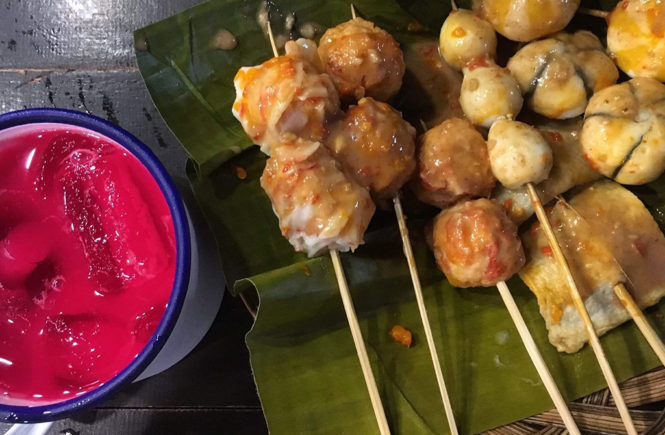
Jalan, which is located at Sobrecarey St, Obrero, serves traditional Malaysian fares such as beef rendang and nasi lemak. While these are delicious, it is their lok lok skewers that I like the most. 

Lok lok skewers are basically flavored gluten balls that you dunk into a boiling chicken stock for two minutes to cook. Then you slather it with your choice of sauce. My favorites are the spicy sambal and peanut sauce. 

I tried the Maranao version of beef rendang and it is a bit different from the one served in Jalan which is saucy. I like the Maranao version better but the one served in Jalan can hold its fort. 

I am not a chicken fan, but I guess if you slather sambal all over your food it will taste good, because the nasi lemak (fried chicken with cucumber and egg on the side) tasted great.
There’s just one thing that did not suit my taste and that was their rose lassie, a rose flavored juice. It tastes of cheap perfume. But other than that, everything was superb. 

Another thing worth noting is that the servers at Jalan are a very cheerful bunch. They were also very helpful to their ignorant customers (that’s me). They’ll make your dining experience more pleasant.

Martial Law be Damned. Adtu ta sa Buda!

Martial Law be damned. There’s no better way to spend the weekend than to go on a froad (food road) trip to Buda in Marilog District to cool off and escape the city noise.

Unlike a few years back when you can’t find a decent place to eat, Buda (Bukidnon-Davao boundary) on the highlands of Davao City, is slowly transforming into a foodie destination. There are now quite a number of quaint restos that serve good food. Plus, the view each resto offers is nothing short of amazing.

Here are three of our favorite eat digs in Marilog:

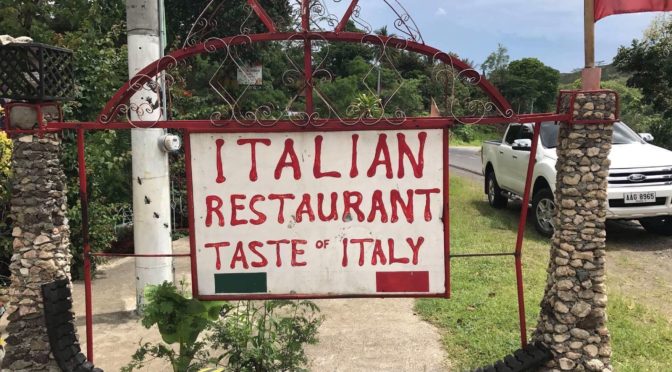
La Toscana

They serve some of the best pasta and pizza in Davao City. Their fresh noodle seafood pasta alone is worth the more than an hour drive. They also have a branch in Tionko Avenue in Downtown Davao, but their pizza tastes much better at their Buda branch. Both branches use the same recipe, but the long travel to get there makes the food taste much better.


Seagull Mountain  Resort Steakhouse

This roadside restaurant has become the unofficial pitstop of motorists traveling to and from Bukidnon to Davao City. What made them famous is their delicious suman and sikwati combo. Your travel to Buda will not be complete if you don’t try this.


Wild Berry Resto
This rustic restaurant just before the quarantine stop in Lorega, Buda serves the most mouthwatering pork tenderloin steak in that part of the map. They also make a mean four berries shake with wild berry, that grows in their nearby farm, as their main ingredient.


Public advisories keep telling people to keep off crowded places, so what better place to go to than Buda. Tara na, adto ‘ta sa Buda.


Want a Showstopper Execution?

In today’s post, I share with you an article on showstopper executions written by the Research Director of Omnicom Media Group Philippines.


Want A “Showstopper” Execution?

Dan Ryan Catalan

A “showstopper” that’s what you call an advertising execution that is sweeping off the feet of many advertising practitioners.  It’s a sensational feat for an advertising agency for its brainchild to create public buzz or trend online.  It’s the kind of execution that gets told over and over, even a decade after as reference for best ad-campaign practices.

Given a thousand ways to skin a cat, the “best way” for some advertising practitioners is the most “innovative”, most “creative”, most “revolutionary” and other synonymous buzzwords in the advertising vocabulary.  Why not, even marketing practitioners can’t help but to marvel and be envious of these ingenious executions paraded in mass media.

On the flipside, it is also these coveted wows, which trigger to jump the gun on executions.  With so much excitement on a spontaneous idea, there is a tendency to pre-empt the planning process.  In some cases, the execution becomes a blinder, rendering the insights and strategic process as mere support or embellishment, and worse, a pro-forma.

Nonetheless, seasoned communication experts can discern.  Omnicom Media Group CEO, Nic Gabunada explains… “Off-hand, it won’t be fair to discount the creative process that agencies go through.  But it makes you think when the execution starts outshining the brand.  You may praise the agency that came up with the brilliant execution, but the brand ends up with the shorter end of the stick”.  He adds, “You can tell if the campaign is about awards or if it’s an authentic brand communication.”  This happens with advertisers naively falling into the game, too eager to be the brand that comes up with “next-in-thing”.

It is no secret that the process involving a total communications plan is long and arduous.  It involves multiple translations of thoughts—from consumer behaviour and brand equities to insights, from brand strategy to a creative material, from a creative handle to a media idea, from a media idea to executions.  Many times, the brand or marketing objectives get lost in translation.

Here are five nifty tips that marketing practitioners can employ to keep executions on track:

  1. Wear Your Brief Tightly:  Keep the brief printed and on-hand in every meeting and brainstorming session to keep tab of the brand objectives.
  2. Be The Consumer:  Compose your insight statements or insight setup for your advertising concepts, personally expressed from the target market’s point of view.   Of course, insights do not normally come straight from a consumer’s mouth, but stating the insights in the first person’s point of view will keep you consumer-oriented on your next steps.
  3.  Walk forward:  Working backwards starting from creative executions to consumer insight and brand objectives is a force-fit, and would not likely bring about a genuine consumer connection.  Insights about the brand and consumer should be the core of a strategy, not a creative idea.
  4.  Involve the Brand:  Always include the brand in crafting your strategy or concept statements. This should ensure that the brand is the focus of the plan or strategy.
  5.  Visualize the Media Idea / Strategy:  Creative handles are sometimes difficult or impractical to translate to media executions. Planners need to express the communication objective in an actionable/execution-oriented media idea.  However, this can steer one away from focusing on the brand.  Hence, a media idea or strategy statement should be supported by a “media concept”.  This concept articulates a clear vision on how the brand and its message will travel through different channels and reach the consumers effectively.

Impressive executions may be an advantage in cutting through the media clutter and amplifying brand messages, but an execution that is hollow on strategy and insight will be short in offering something substantial for the audience to sink their teeth into.